The section below contains definitions of words and phrases commonly used in hydropower licensing. Refer to this page when going through our Hydroguides.
You can also download a pdf version of the document here.
§ Section
7Q10 Seven-day, ten-year low flow
ABF New England Aquatic Base Flow
ACHP Advisory Council on Historic Preservation
Acre-Foot a volume of water adequate to cover an acre to a depth of one foot, or 325,851 gallons.
Action Alternative an alternative to the licensing action proposed by the licensee.
ADA Americans with Disabilities Act
Adaptive Management Adaptive management is the application of scientific information and explicit feedback mechanisms to refine and improve future management decisions.
Adequate License Application a determination by FERC that a license application complies with the minimal requirements for form and substance.
Afterbay a reservoir located immediately downstream from a powerhouse, typically used to regulate powerhouse discharge.
AIR Additional Information Request.
ALP Alternative Licensing Process.
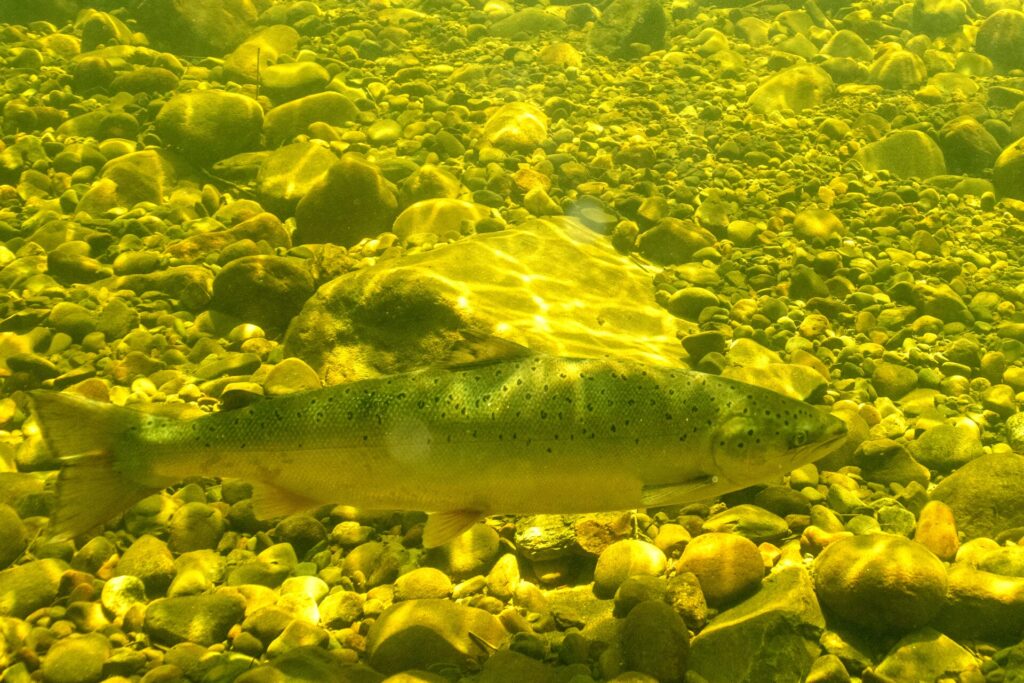
Anadromous fish that hatch in freshwater, migrate to the sea, and return to freshwater to spawn (e.g. salmon or steelhead trout).
APE Area of Potential Effect
APEA Applicant Prepared Environmental Assessment.
BA Biological Assessment
Baseline (or Environmental Baseline) the environmental conditions that are the starting point for analyzing the impacts of a proposed licensing action (such as approval of a license application) and any alternative. Under FPA Part I, as discussed in Section 2, the baseline consists of the existing conditions of the waters and lands in the project area at the time of the licensing proceeding. Under the ESA, baseline is defined differently as: past and present impacts of all Federal, State or private actions and other human activities in the action area, the anticipated impacts of all proposed Federal projects in the action area that have already undergone Section 7 Consultation, and the impact of State or private actions which are contemporaneous with the consultation process (50 C.F.R. § 402.02).
BAT best available technology
BATNA best alternative to a negotiated agreement
Biological Assessment a document prepared by the licensee, under the supervision of the FWS or NMFS, as the basis for a Biological Opinion. This document evaluates the potential impacts of a licensing decision on a fish, wildlife, or plant species listed or proposed for listing under the ESA or on proposed or designated critical habitat for such species.
Biological Opinion a document, prepared by the FWS or NMFS, which includes: (1) the opinion of the administering agency whether a licensing action is likely to jeopardize the continued existence of a listed species or result in the destruction or adverse modification of designated critical habitat; (2) a summary of the information on which the opinion is based; and (3) a detailed discussion of the impacts of the action on listed species or its critical habitat.
BLM U.S. Department of Interior, Bureau of Land Management
BO Biological Opinion.
Bulkhead a water-retaining structure, like a dike.
Bypass Reach the reach of a river between a dam (or other diversion structure) and powerhouse.
Catadromous a fish that hatches in freshwater and migrates to the sea to spawn, such as American eel.
CEC California Energy Commission
CFR Code of Federal Regulations
CFS Cubic feet per second.
CHRC California Hydropower Reform Coalition
CIA Cumulative Impacts (or Effects) Analysis.
CLAMS Coastal Landscape Analysis and Modeling Study
Competing Development Application any license or exemption application for a proposed project that would use the same water resources as another proposed project for which an application for preliminary permit or license has already been filed with FERC.
Comprehensive Plan a plan for the development of generation or other beneficial uses of a river recognized under FPA Act section 10(a)(2)(a).
Conduit any tunnel, canal, pipeline, or similar structure for water conveyance.
Consultation under Federal Power Act Part I, a cooperative effort of the licensee and other participants to prepare and implement a study plan, then prepare a license application, to minimize unresolved disputes of fact and law. Consultation under ESA (Section 7 Consultation) is a cooperative effort of FERC, licensee, and FWS or NMFS, to analyze the impacts of a licensing action on listed species or critical habitats. Such consultation may be formal or informal, as discussed in Section 4.2.2.
CRI Cumulative Risk Initiative
Critical Energy Infrastructure Information (CEII) information concerning proposed or existing critical infrastructure (physical or virtual) which: (1) relates to the production, generation, transmission or distribution of energy; (2) could be useful to a person planning an attack on critical infrastructure; and (3) gives strategic information beyond the location of the critical infrastructure.
Critical Habitat land or water areas which FWS or NMFS has designated to have the physical or biological features essential to the conservation of a species listed under the ESA, as provided in ESA § 3(5)(A).
Cubic Feet per Second (cfs) a water flow of one cubic foot passing a measurement point in a second.
Cumulative Impact under NEPA, the environmental impact that results from the incremental impact of the action in addition to other past, present, and reasonably foreseeable future actions, as provided in 40 C.F.R. § 1508.7. Under ESA, a Cumulative Effect is the impact of future State or private activities, not involving Federal activities, that are reasonably certain to occur within the action area of the Federal action subject to Section 7 Consultation, as provided in 50 C.F.R. § 402.02.
CWA Clean Water Act, 33 U.S.C. §§ 1251-1387.
DA Decision Analysis
Dam any structure for impounding or diverting water.
DEA Draft Environmental Assessment.
Deficient License Application an application which FERC determines does not comply with the minimum requirements for form or substance.
DEIS Draft Environmental Impact Statement.
Designated uses the beneficial uses of water designated as water quality standards under Clean Water Act section 303(a).
Development Application any application for either a license or exemption for a proposed hydropower project.
DFA Demonstration Flow Assessment
Diadromous either anadromous or catadromous fish.
Discharge the release of flow from a dam, powerhouse, or other control structure.
Dismissal rejection of license application on the basis of FERC's determination that the applicant failed to provide required information for an informed decision.
DO Dissolved oxygen
Docket a formal record of a proceeding on a given application for permit, license, or exemption.
DOE Determination of eligibility
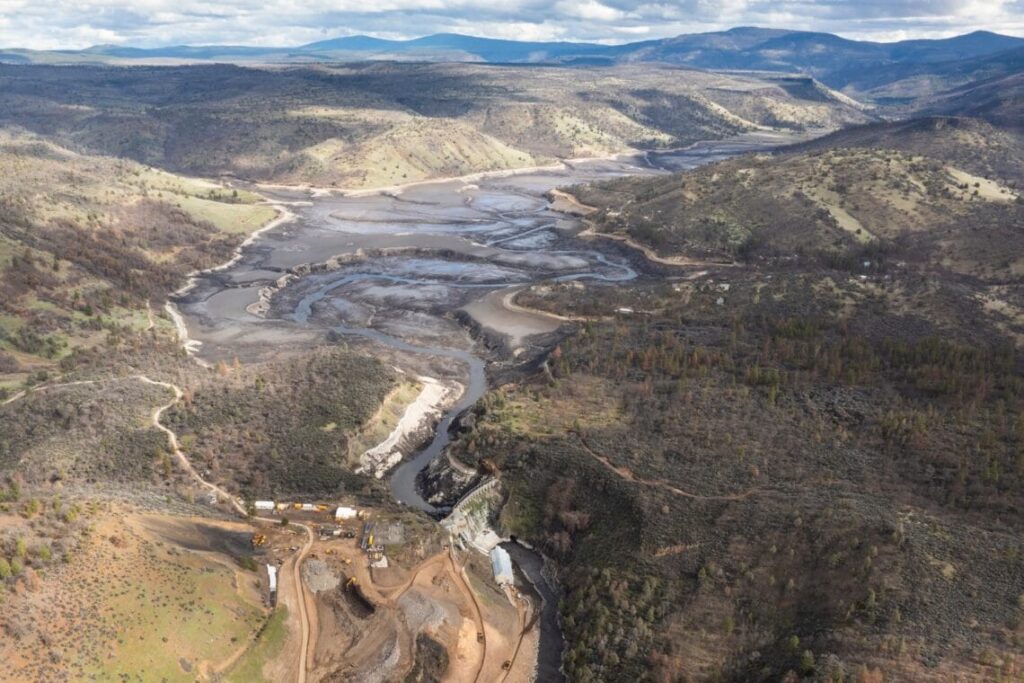
Drawdown the lowering of a reservoir as the result of water withdrawal.
e.g. exempli gratia, for example
EA Environmental Assessment
ECPA Electric Consumers Protection Act.
EDT Ecosystem and Diagnosis Treatment
EIS Environmental Impact Statement
Endangered Species Act (ESA) the federal law, 16 U.S.C. §§ 1531-1544, that provides for protection and recovery of endangered or threatened species of fish, wildlife, or plant.
Endangered Species any species of fish, wildlife, or plant listed under the Endangered Species Act as in danger of extinction throughout all or a significant portion of its range.
Enhancement improvement of the baseline condition of a natural resource.
Entrainment (or Impingement) incidental capture of fish or other aquatic organisms in a trash rack or generator turbine.
Environmental Assessment (EA) a document prepared by FERC and any cooperating agency, pursuant to NEPA, to determine whether a licensing action may significantly affect environmental quality.
Environmental Conditions the numbered articles which, as conditions of a license, require that the licensee undertake measures for protection, mitigation, and enhancement of environmental quality affected by a project.
Environmental Document a document in several forms under NEPA, including an environmental assessment, environmental impact statement, or categorical exemption, and in similar forms under counterpart state laws.
Environmental Impact Statement (EIS) a document prepared by FERC under NEPA to analyze a licensing action that, even after mitigation measures, may have significant adverse impacts on environmental quality.
EPA U.S. Environmental Protection Agency.
EPRI Electric Power Research Institute
EPRI CompMech The Electric Power Research Institute program on compensatory mechanisms in fish populations
ESA Endangered Species Act.
et al. et alii, and others
etc. et cetera, and so forth
Existing Dam any dam that has already been constructed.
Federal Lands lands which the U.S. holds in fee title.
FERC Federal Energy Regulatory Commission
FFG Functional feeding group
Filing any document filed in a licensing proceeding.
Fish and Wildlife Agencies FWS, NMFS, and any state agency with jurisdiction over fish and wildlife resources in the state where a hydropower project is located.
Fish and Wildlife Recommendation a recommendation to protect, mitigate, or enhance fish and wildlife resources affected by a hydropower project.
Fishway a structure or device used to permit the passage of fish through, over, or around a hydropower project, such as a fish ladder or a trap-and-truck operation.
Flashboard removable board used on a dam, including a spillway, to increase storage capacity.
FLIR Forward-looking infrared
FLMA Federal Land Management Agency.
Flume a lined structure used to convey water.
Fluvial Relating to or inhabiting a river or stream
Forebay a reservoir upstream from a powerhouse, used to regulate the flow of water into the powerhouse.
FPA Federal Power Act, 16 U.S.C. §§ 791-823 (Part I) and 16 U.S.C. §§ 824-824n (Part II).
ft Foot or feet
ft2 Square foot or feet
FWCA Fish and Wildlife Coordination Act, 16 U.S.C. §§ 661 - 666c.
FWPA Federal Water Power Act.
FWS U.S. Fish and Wildlife Service, an agency within the U.S. Department of Interior.
Geomorphology the science used to analyze how water flow and land interact, such as the capacity of a given flow to carry sediment.
GAO Government Accountability Office
GIS Geographic Information System
HBI Hilsenhoff Biotic Index
Head vertical distance between the surface of a reservoir or other intake location and the powerhouse.
Headwater the source of a river, above a hydropower project.
HEC-RAS The Hydrologic Engineering Center's River Analysis System
HRC Hydropower Reform Coalition
HSPF Hydrologic Simulation Program Fortran
Hydrograph a chart or table that depicts the water volume as a function of time.
i.e. id est, that is
IBI Index of Biological Integrity
ICP, IIP, ICD Initial Consultation Package, Initial Information Package, or Initial Consultation Document.
IFIM Instream Flow Incremental Methodology
IHA Indicators of Hydraulic Alteration
ILP Integrated Licensing Process
IOD Investor Owned Utilities
Impoundment a reservoir.
Inc. Incorporated
Initial Consultation Document (ICD) document prepared by licensee in first stage of development of a license application, for the purpose of consultation with state and federal agencies, FERC, and participants regarding the application.
Initial Development Application (IDA) an application for development of a site for which no prior application has been filed.
Installed Capacity the instantaneous capacity of the project to generate electricity, expressed in kilowatts or megawatts.
Instream Flow water flowing in the channel of a river or stream.
Interagency Task Force (ITF) a work group (1999-2001) which prepared the Interagency Task Force Report stating recommendations for agency coordination in hydropower regulation.
Interlocutory before the final decision in a proceeding.
ISAB Independent Scientific Advisory Board
ITS Incidental Take Statement.
Jeopardy a risk of extinction for a species listed under the Endangered Species Act.
km Kilometer
LAC Limits of acceptable change
Levee any earthen structure that channels water.
License Articles individual articles which state the licensee's duties for construction, operation, and maintenance of a hydropower project.
Licensee entity which holds a license and thus is legally responsible for construction, operation, and maintenance of a project. For simplicity of reference, this Toolkit uses the term "licensee" to describe a license applicant, including an applicant for original license.
LIDAR Light detection and ranging
Load the amount of electrical power or gas delivered or required at any point on a system.
LWD Large woody debris
m Meter
Major Project hydropower project with generating capacity of more than 1.5 MW, as defined in 18 C.F.R. § 4.30(b)(14)-(16).
Mandatory Conditioning Authority the authority of a federal agency to prescribe conditions which FERC must incorporate in a license.
MesoHABSIM Mesohabitat simulator
Minor Project a hydropower project with an installed generation capacity of 1.5 MW or less, as defined in 18 C.F.R. §4.30(b)(17).
Mitigation avoidance or reduction in thepotential impact of a license or exemption.
mm Millimeter
mm y-1 Millimeters per year
MOA Memorandum of Agreement.
MW Megawatt.
MWh Megawatt-hours.
N15 Nitrogen 15 isotope
N17 Nitrogen 17 isotope
NEPA National Environmental Policy Act, 42 U.S.C. §§ 4321 - 4347.
NGO Non-governmental organization
NHPA National Historic Preservation Act, 16 U.S.C. §§ 470-470x-6.
NMFS (formerly NOAA Fisheries) National Marine Fisheries Service, fisheries branch of the U.S. Department of Commerce.
No. Number
NOAA National Oceanic and Atmospheric Administration
No-Action Alternative the alternative whereby a federal agency takes no action. In an original licensing proceeding, this is the denial of the license application. In a relicensing proceeding, this is typically considered to be the renewal of the existing license without modification.
Nonfederal Lands lands not owned by the U.S.
Nonpower License a temporary license for an existing project during a transition from power generation to an alternative use not subject to FERC's jurisdiction.
Notice of Intent (NOI) document that the licensee files at least five years before expiration of a license, to state its intent whether it will seek a new license.
NPS National Park Service, an agency within the U.S. Department of Interior.
NRC National Research Council
NRCS Natural Resources Conservation Service
NRHP National Register of Historical Places
NYMEX New York Mercantile Exchange
ODFW Oregon Department of Fish and Wildlife
OEP Office of Energy Projects, the FERC office responsible for licensing non-federal hydropower projects.
Original License the first license issued for a hydropower project.
PAD Pre-Application Document.
Patently Deficient a determination by FERC that an application substantially fails to comply with requirements for the form or substance of an application.
PCBs Polychlorinated biphenyls
PCR Polymerase chain reaction
Peaking operation of a hydropower projects to meet peak electrical demands.
Penstock an inclined pipe to convey water to the powerhouse.
PGE Portland General Electric
pH Potential of hydrogen
Ph.D. Doctor of Philosophy
PHABSIM Physical Habitat Simulation
PIER Public Interest Energy Research Program
PIT Passive integrated transponder
PM& E Measures Protection, Mitigation, and Enhancement measures.
PNNL Pacific Northwest National Laboratory
Powerhouse a structure that contains the turbine and generator of a hydropower project.
Process Plan A licensee's plan for how to conduct the relicensing. It can include Communications Protocols for the stakeholder meetings and a Schedule.
Project the dam, powerhouse, reservoir, and any other structures, rights, lands, and waters regulated by a license or exemption.
Project Boundary the boundary designated by FERC to identify the lands and structures included in a license or exemption.
Proposed Action the activity planned by a federal agency that generates the need to prepare as EIS. In the context of a licensing proceeding, the proposed action describes FERC's issuance of a license to the license applicant.
Pumped storage a project which pumps water uphill to a reservoir for subsequent use.
PUC Public Utility Commission
PUD Public Utility District
PURPA Benefits benefits under PURPA section 210(a), 16 U.S.C. § 824a-3, which requires electric utilities to purchase electricity from, and to sell electricity to, qualifying facilities such as small hydropower projects.
PURPA Public Utility Regulatory Policies Act, 15 U.S.C. §§ 717x - 717z, 3201 - 3211; 16 U.S.C. §§ 823a, 824a-1 - 824a-4, 824i - 824k, 825q-1, 2601 - 2603, 2611 - 2613, 2621 - 2627, 2631 - 2634, 2641 - 2645, 2701 - 2708; 42 U.S.C. § 6808; 43 U.S.C. §§ 2001 - 2012.
QHA Qualitative Habitat Assessment
QUAL2k EPA's Stream Water Quality Model
Ramping the act of changing discharge from a dam or powerhouse.
Ramping Rate the rate at which discharge from a powerhouse or dam changes.
RCHARC The Riverine Community Habitat Assessment and Restoration Concept
Ready for Environmental Analysis (REA) the determination by FERC that an application is adequate for the purpose of preparing the environmental document under NEPA.
Real Property Interest fee title, right-of-way, easement, or leasehold.
Reasonable and Prudent Alternatives (RPAs) recommended alternatives to a licensing action, as identified during formal Section 7 Consultation, that can be implemented in a manner consistent with the intended purpose of the action and with the scope of FERC's legal authority and jurisdiction, that are economically and technologically feasible, and that FWS or NMFS believes would avoid the likelihood of jeopardizing the continued existence of listed species or resulting in the destruction or adverse modification of designated critical habitat" (50 C.F.R. §402.02).
Reasonable and Prudent Measures (RPM) actions the FWS or NMFS believes are necessary or appropriate to minimize the impacts of a licensing action on listed species (50 C.F.R. § 402.02). RPM, which are identified in Incidental Take Statements, and cannot alter the basic design, location, scope, duration, or timing of the licensing action and may involve only minor changes.
Reservation of authority a provision whereby an agency reserves its authority to take further or different action in the future.
Reservation a national forest, Indian reservation, military reservation, or other land owned by the U.S. and reserved from private appropriation and disposal. For the purpose of FPA section 4(e), this definition does not include a national monument or national park.
Reservoir a pond or lake stored by a dam.
Reservoir Storage Capacity the maximum amount of water which may be stored in a reservoir, typically expressed in acre-feet.
Resource Agency a federal, state, or interstate agency which has jurisdiction over flood control, navigation, irrigation, recreation, fish and wildlife, water supply, or cultural resources of the state in which a project is located.
Riparian of or relating to the bank of a river or sometimes other waterbody
RPMs Reasonable and Prudent Measures.
Run-of-the-river a hydropower project that generates at the rate of inflow without change as a result of storage in a reservoir.
RVA Range of Variability Approach
Sac EFT Sacramento Ecological Flows Tool
SALMOD USGS's Salmonid Population Model
SCORP State Comprehensive Outdoor Recreation Plan.
SD Scoping Document.
SD-1 Scoping Document 1.
SD-2 Scoping Document 2, as revised following public comment.
Sediment Load the amount of sediment carried by flow.
SHPO State Historic Preservation Officer.
SHRP Salmon Habitat & Recovery Planning
SLAM Salmon Lifecycle Analysis Modules
SMP Shoreline Management Plan.
SNTEMP Stream Network Temperature model
SPAZ Salmon Population Analyzer
Spillway a structure over or through which excess or flood flow may be discharged from a reservoir.
SSTEMP Stream Segment Temperature model
Study Plan a document outlining studies to be performed to prepare a license application and for a final license decision
SWAM Salmonid Watershed Analysis Model
t km-2 y-1 Tons per square kilometer per year
Tailrace a structure through which a powerhouse discharges flow into the river or other receiving water.
Take to harass, harm, pursue, hunt, shoot, wound, kill, trap, capture, or collect an endangered species, or to attempt to engage in any such conduct, as defined in 16 U.S.C. § 1532(19). Harm is further defined by the U.S. Fish and Wildlife Service (FWS) and NMFS to include significant habitat modification or degradation that results in death or injury to listed species by significantly impairing behavioral patterns such as breeding, feeding, or sheltering. Harass is defined by FWS as actions that create the likelihood of injury to listed species to such an extent as to significantly disrupt normal behavior patterns which include, but are not limited to, breeding, feeding or sheltering (50 C.F.R. §17.3).
TCPs Traditional cultural properties
TDG Total dissolved gas
THPO Tribal historic preservation offices
Threatened Species any species that is likely to become an endangered species within the foreseeable future throughout all or a significant portion of its range, as listed under the Endangered Species Act, 16 U.S.C. § 1532(20).
TLP Traditional Licensing Process.
TMDL Total maximum daily load
TSI Trophic state index
ULEP Umpqua Land Exchange Project
USACE U.S. Department of Defense, Army Corps of Engineers
USBIA United States Bureau of Indian Affairs
USDA Forest Service U.S. Department of Agriculture, Forest Service
USFS Unites States Forest Service
USFWS U.S. Department of Interior, Fish and Wildlife Service
USGS U.S. Department of Interior, Geological Survey
vs. Versus
WSJ Wall Street Journal
Water Quality Certification (Section 401 Certification or Certification) the document issued by the State where a project discharges, pursuant to Clean Water Act (CWA) section 401(a), 33 U.S.C. § 1341, to assure that a license complies with applicable water quality standards.
Water Quality Standards designated beneficial uses, narrative or numeric criteria, and an anti-degradation policy adopted by the State under CWA section 303, 33 U.S.C. § 1313, for protection of the quality of water affected by human activities, including hydropower projects.
WQC Water Quality Certification.
WUA Weighted useable area
Note: The above are summaries in plain English. You may find legal definitions at 16 U.S.C. § 796,18 C.F.R. § 4.30(b) (FPA Part I terms); 40 C.F.R. Part 1508 (NEPA terms); 33 U.S.C. § 1362, 40C.F.R. §§ 121.1, 122.2 (CWA terms), 16. U.S.C. 1532, 50 C.F.R. § 450.01 (ESA terms), and in other statutes, rules, and primary authorities.